Micro/nanofabrication technologies, particularly high-precision lithography and etching processes, enables the construction of micro-nano structures with specific morphologies, feature sizes, spatial arrangements, and aspect ratios on material surfaces, achieving precise control over interfacial wettability and electric-field distribution. Meanwhile, lithography and etching processes are compatible with semiconductor manufacturing technology and possess high repeatability, patternable design, and the potential for large-area batch fabrication. Applying these micro/nanofabrication advantages to address current bottlenecks in aqueous zinc-ion battery anodes, such as dendrite growth, hydrogen evolution reactions (HER), and interfacial corrosion, offers entirely new solution pathways. Specifically, micro-nano structures fabricated via lithography and etching can effectively regulate interfacial wettability and electric-field distribution, guide uniform Zn²⁺ deposition within confined spaces, suppress dendrite growth at the source, and mitigate side reactions. Integrating microstructure engineering, wettability modulation, and electric-field design offers a promising strategy for constructing ultra-stable anodes featuring uniform deposition, suppressed side reactions, and rapid ion transport, thereby providing a scalable micro/nanofabrication route toward safe and long-cycle aqueous zinc-ion batteries.
Associate Professor Zhao Zejia from the College of Mechatronics and Control Engineering at Shenzhen University, in collaboration with Professor Wang Jingwei and collaborators from Shenzhen MSU-BIT University, published their latest research in Advanced Energy Materials (Impact Factor: 26). The study introduces a surface-geometry-engineering strategy in which lithographically etched micropillar arrays are employed to achieve an optimal balance between wettability (contact angle: 100°) and electric-field distribution. Finite-element simulations revealed that the microstructures effectively eliminated tip-enhanced electric-field concentration and promoted dense and uniform Zn²⁺ deposition. The Zn100° symmetric cell demonstrated cycling stability exceeding 6,000 hours, while the full cell retained a capacity of approximately 110 mAh g⁻¹ after 10,000 cycles. The pouch cells were capable of powering small fans and LED displays, as well as charging mobile phones, offering a new strategy for the design of high-performance zinc anodes.
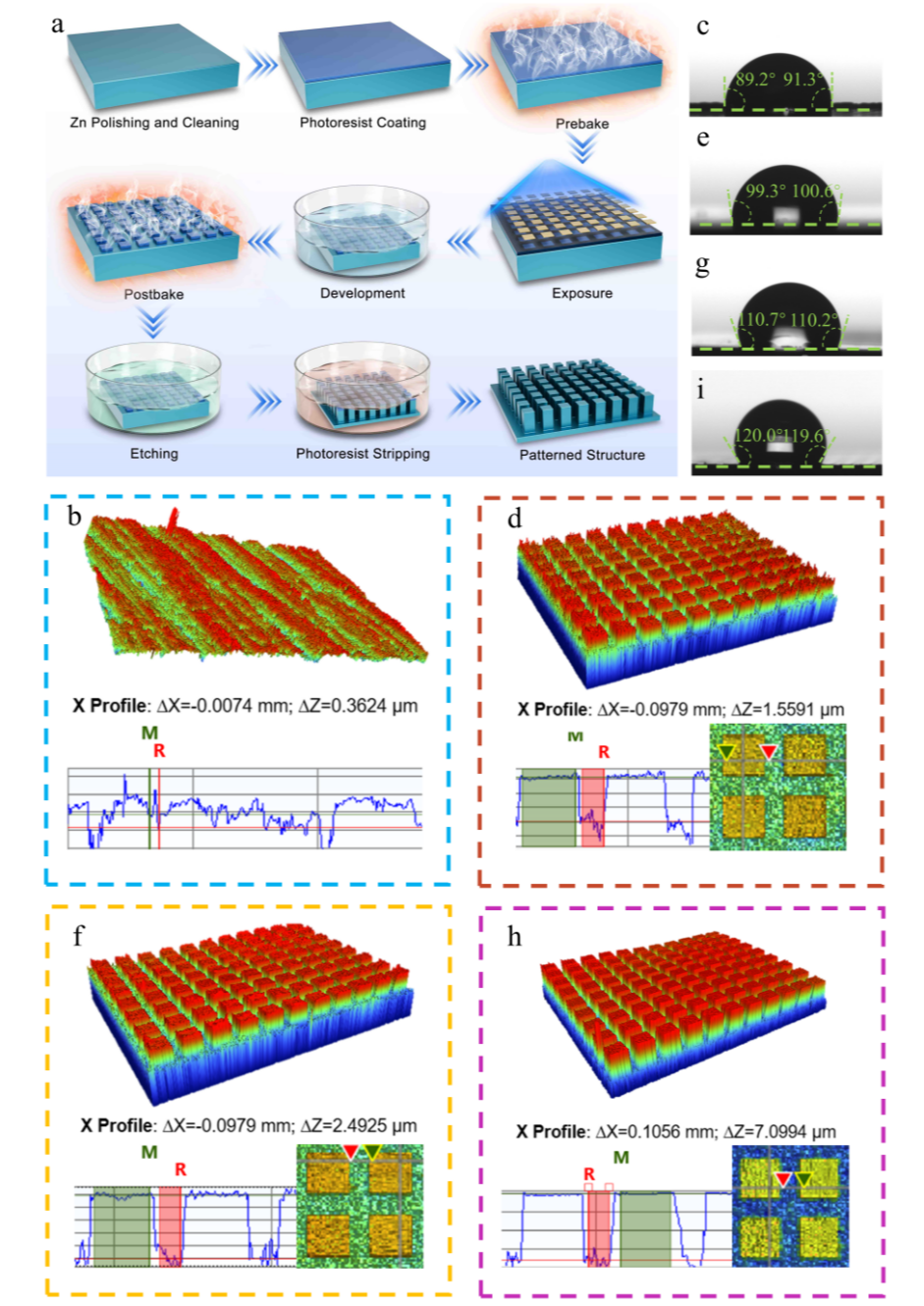
Figure 1. Microstructure Fabrication Process and Corresponding 3D Structure and Contact Angle
To achieve high-precision and controllable fabrication of zinc anode microstructures, the study proposed a microfabrication process based on lithography and wet etching. By precisely controlling etching time to adjust micro-pillar height and introducing spatial confinement effects to overcome tip electric-field concentration and wettability imbalance, a micro-square pillar array zinc anode with side length 200 μm, spacing 100 μm, and continuously tunable contact angle from 100° to 120° was successfully fabricated.
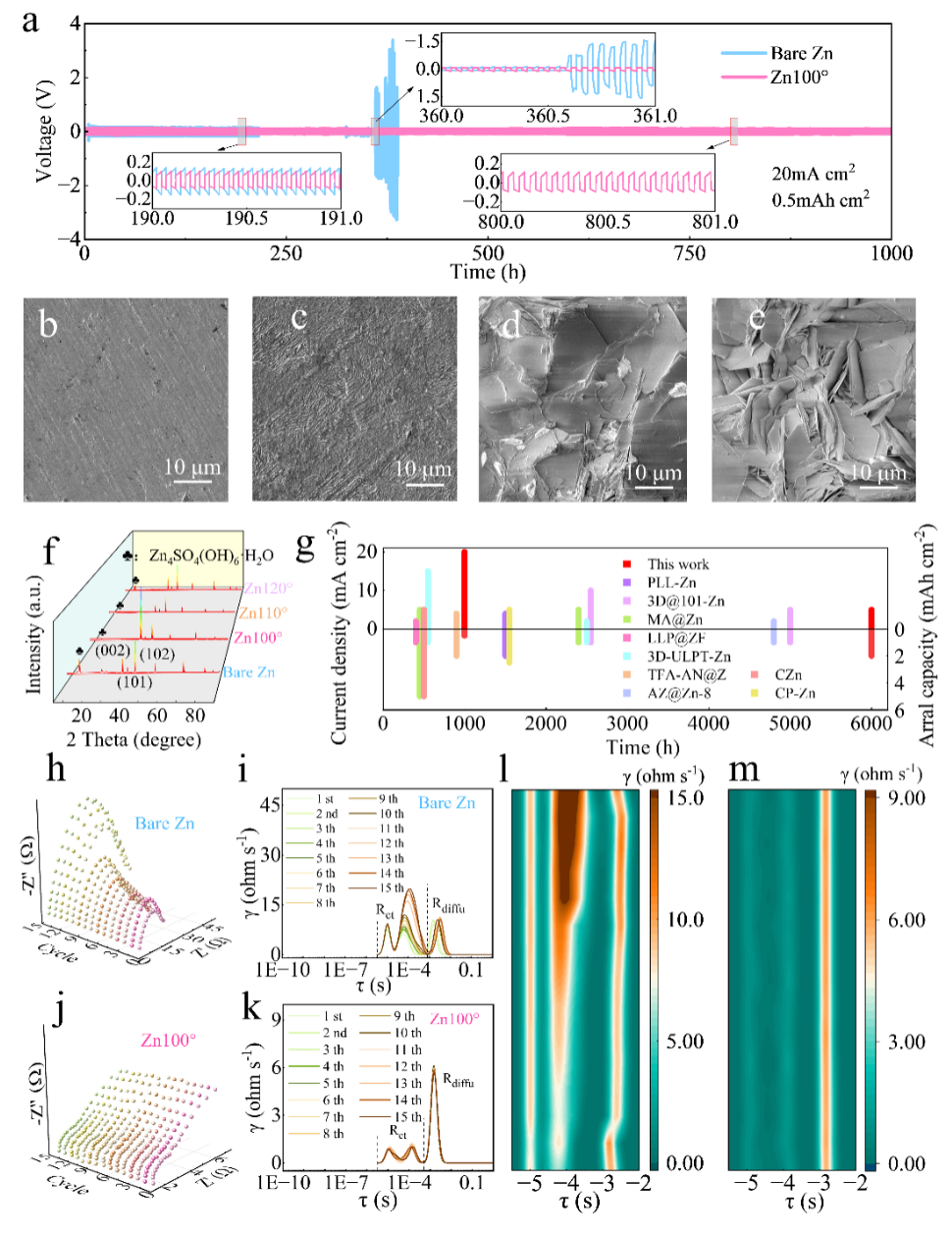
Figure 2. Electrochemical Performance of Symmetric Cells
Relying on the synergistic regulation of electric-field distribution and wettability by the micro-square pillar array, the study achieved four key performance advances on the zinc anode:
(3) Dual theoretical and experimental validation for precise regulation of electrochemical performance: The lithium storage mechanism is revealed through DFT calculations, combined with characterization tests to verify material performance, achieving a high degree of consistency between theory and experiment.
Figure 2. Electrochemical Performance of Symmetric Cells
3. Application Value
The Au-TC composite anode material exhibits excellent electrochemical performance. It maintains a high specific capacity of 465 mAh g⁻¹ after 400 cycles at a current density of 0.1 A g⁻¹, with a lithium-ion diffusion coefficient of 4.72×10⁻¹¹ cm²/s, and demonstrates good thermal stability at high temperatures. It holds core application potential in multiple fields:
(1) Ultra-long cycle life: The Zn100° symmetric cell stably cycled for over 6,000 hours at 5 mA cm⁻² and 2 mAh cm⁻², and remained stable for over 1,000 hours even at a high current density of 20 mA cm⁻², far exceeding bare zinc electrodes (which short-circuited in less than 120 hours).
(2) Effective dendrite suppression: After cycling, the Zn100° electrode surface was smooth and dense, with no obvious dendrite growth.
(3) Significant reduction of side reactions: XRD showed only weak byproduct peaks on the Zn100° electrode after cycling; the Tafel curve indicated lower corrosion current, and in-situ optical observation showed no obvious hydrogen evolution bubbles.
(4) Enhanced interfacial reaction kinetics: In-situ EIS and DRT analysis showed that the charge transfer resistance of the Zn100° electrode remained extremely low and stable throughout the cycling process, confirming fast and reversible zinc deposition/stripping reactions. In summary, the synergistic design strategy of “electric-field homogenization and wettability balance” coupled with the “microstructure confinement and interfacial stabilization” mechanism jointly accelerate the translation of ultra-stable zinc anodes from laboratory-scale validation toward practical applications.
Paper Link: https://doi.org/10.1002/aenm.71039
Prepared by: Zhao Zejia
Typeset by: Chen Shifa
First Review and Proofreading: Ren Luyang
Second Review and Proofreading: Ma Jiang
Third Review and Proofreading: Zheng Chun